Social Structure The halach uinic was the highest ranking individual within each city-state and was the most important government and religious figure in Mayan society. The almehenob, the nobles, were the members of the powerful ruling elite who represented a small percentage of the total population who controlled the government, warfare, and commerce. Their administrative positions were hereditary. As an indicator of power and influence of nobility, their dwellings had frontage on central plazas within the city-state. In each generation one member of the family, usually the eldest male, was recognized as the head and inheritor. This practice was known as primogeniture. The powerful ahkinob, priests, were members of the upper class and had their own hierarchy. The uppermost of the social structure was the Ah Kin, the high priest. Below them were the assistant priests and local priests who controlled religion within the villages. The independent Mayan city-states were linked by a common language and trade. Larger centres dominated smaller ones, with local centres treating these states like colonies. Large city-states established satellite city-states, colonies, which expanded their territory and power. Some of the city-states served as an administrative centre for the entire geographic region. As well as performing ceremonies within the city-state, priests participated in activities of daily life. They studied the heavens on the day and hour of a child’s birth, celebrated marriage and burials, and formed schools to educate young males of the nobility in order to perpetuate the Mayan history. The ah chembal uinicob, the commoners, had professions such as: artists, artisans, traders and minor officials, who occupied somewhat of a middle position. A vast majority of commoners were farmers and were required to help build the city-states. They lived outside the city-states in villages nearby their fields. The pentacob, slaves, were at the lowest level of the Mayan social pyramid. Some were born into slavery and others became slaves as punishment for crimes or were captured during wars. Most slaves were criminals as the Mayan civilization had no jails. Their duties included grinding corn and carrying trade goods between the highlands and the coast. The Olmec had a hierarchical social order; its elite had control of the society’s water and monumental stone which wielded command in their establishment. The elite gained strength and connected themselves with animal deities, which became part of their religion. The godlike elite authorized their power through their lineages. This elite class of Olmec lived in outlying villages with a substantial separation between elite and the commoners. Those who directed the trading of goods with the Olmec were given the opportunity to succeed to an elite position within their communities. Once they had established control of the resources and an elite class had evolved, they expanded the growth of the civilization. As villages and cities took formation, it was necessary for the Maya to develop water management, which insured that they had access to water throughout the year. The conception of water management required planning and organization, resulting in the position of a “Simple Chief.” Further cooperation between the villages required increased planning and organization, which led to the formation of a “District Chief.” As the population grew and the districts expanded more efficiency was needed. This ensued the role of the “Paramount Chief,” who was chosen to oversee the water management system. This person ruled his peers within the community and because he controlled a vital resource for the survival of the community, he had a great deal of social power. As these regional states grew, rulers were not able to cope with the administration, so levels of administrators were then established. Power was handed down along lines of descent and this elevated the heads of lineages into a superior status, which led to eventual ancestor worship and divine right status for the lineage. | The Toltec The Toltec was a militaristic aristocracy society. Military leaders, as well as religious leaders, ranked high in the social order. The Toltec peoples had a chief-like figure who ruled each particular city. Religion influenced the upper workings of the military, as they would have acted only if their gods were in favour of these actions. The middle class consisted of craftsmen, astronomers, merchants, other trained professionals and the working class who all helped to build the cities. Two types of civilizations emerged in Mesoamerica: the highland and the lowland. The highland category was an advanced cultural organization, characterized by a conglomerate of states and empires. These consisted of elaborate social class structures, complex organizational traits, advanced urbanization and architecture, bureaucracies and densely settled agrarian areas. The lowland formed primitive aboriginal groups with little or no social structure, government, or architecture. These new civilizations had a social structure ruled by a class priest, who acted as the representative of the gods. He distributed land, allocated food surpluses, sponsored trade, and employed skilled craftsmen.  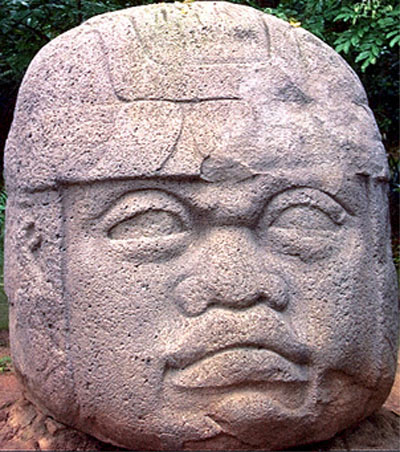 |
Social Structure | The Toltec The Toltec was a militaristic aristocracy society. Military leaders, as well as religious leaders, ranked high in the social order. The Toltec peoples had a chief-like figure who ruled each particular city. Religion influenced the upper workings of the military, as they would have acted only if their gods were in favour of these actions. The middle class consisted of craftsmen, astronomers, merchants, other trained professionals and the working class who all helped to build the cities. |
